Conecta con nosotros

General

Cómo viven los candidatos bahienses los últimos minutos del Sábado

Publicado

en

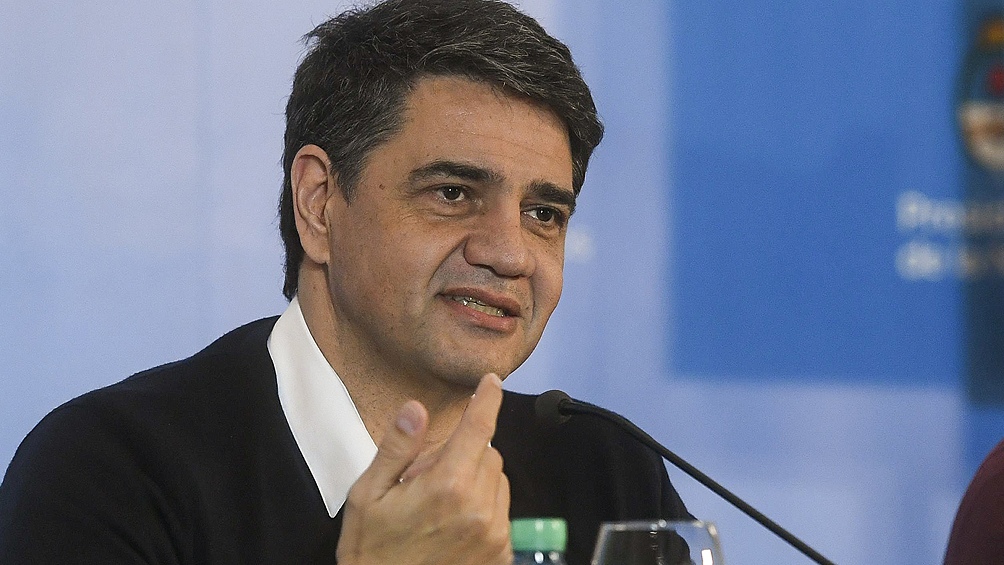
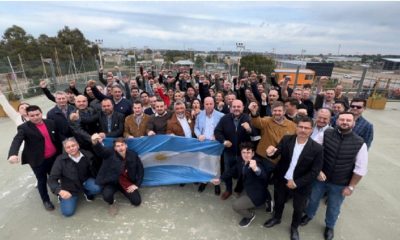
Bahía Política te muestra, en el siguiente vídeo, cómo viven los candidatos bahienses los últimos minutos del sábado previo a las elecciones primarias de mañana.

Advertisement

General

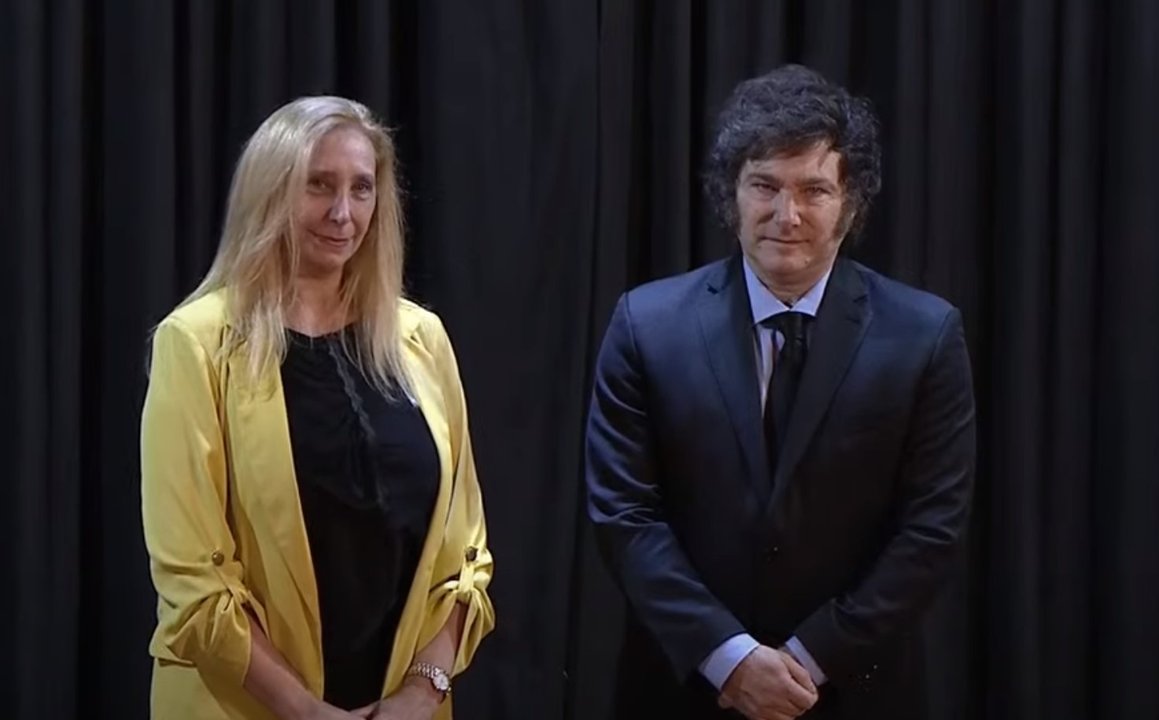
Javier Milei viajará a Oslo para participar de la entrega del Premio Nobel de la Paz a María Corina Machado

Publicado

en

El presidente Javier Milei partirá la noche de este lunes a Oslo, capital de Noruega, para asistir a la ceremonia de entrega del Premio Nobel de la Paz a la líder opositora venezolana, María Corina Machado, principal referente de la lucha por los derechos humanos en su país y la más importante opositora a la dictadura de Nicolás Maduro.

Tal como había anticipado Infobae, el mandatario argentino decidió asistir al evento que se realizará el próximo 10 de diciembre, ratificando así también su posición geopolítica alineada a la de Donald Trump, que en el último tiempo intensificó su ofensiva contra el régimen chavista.

De acuerdo con lo que precisaron a este medio fuentes oficiales, el líder libertario abordará por la noche un vuelo especial acompañado únicamente por su hermana y secretaria general, Karina Milei.

En línea con el cronograma previsto, la comitiva arribará a suelo noruego el martes, por lo que tendrá algunas horas libres ese día, ya que recién el miércoles se realizará el evento.

En el acto se encontrarán también los presidentes de Ecuador, Daniel Noboa; de Paraguay, Santiago Peña; de Panamá, José Raúl Mulino Quintero, y el presidente legítimo de Venezuela, Edmundo González Urrutia, quien ganó las últimas elecciones, pero no pudo asumir por el fraude a gran escala cometido por Maduro.

Asimismo, asistirán al encuentro varios referentes de la resistencia contra la dictadura, como la abogada Adriana Flores Márquez, directora de la agrupación Comando Venezuela en la Argentina y ex jefa de campaña de Corina Machado.

Para esta jornada, los dirigentes latinos planificaron una serie de actividades cerca del Centro Nobel de la Paz, un antiguo museo situado en el centro de la capital de Noruega, que es la sede de la ceremonia central.

Por caso, varios de ellos se reunirán a partir de las 12 del miércoles (hora noruega) en la Plaza del Ayuntamiento de Oslo, justo frente a este establecimiento, donde se montarán pantallas gigantes que transmitirán videos explicando las atrocidades cometidas por el régimen chavista.

Posteriormente, se realizará la tradicional Marcha de las Antorchas organizada por The Norwegian Venezuelan Justice Alliance, una ONG local que reclama por la libertad, la democracia y los derechos humanos en la nación caribeña.

Esta movilización, que se hace en honor a los galardonados desde la década de 1950, históricamente la coordina el Consejo Noruego de la Paz, pero este año no será así por diferencias ideológicas con la ganadora de la distinción, según pudo saber Infobae de fuentes interiorizadas con la organización del evento.

Para las 17:30 está prevista la concentración, quince minutos más tarde habrá una bienvenida por parte de quienes hacen la convocatoria y a las 18:15 comenzarán a encenderse las antorchas.

Los manifestantes se movilizarán iluminando todas las calles a su paso hasta llegar a la plaza situada frente al Stortinget (Parlamento de Noruega), donde a las 19:00 se llevará adelante un acto de clausura.

Dentro del Centro Nobel de la Paz, en tanto, las autoridades del premio también planificaron actividades con artistas y referentes de la cultura venezolana, como la pianista y compositora Gabriela Montero y el cantante de reguetón Daniel Alejandro Morales Reyes, más conocido como Danny Ocean.

El galardón a Corina Machado le será entregado por los encargados de la fundación en conjunto con los cuatro jefes de Estado que están confirmados, Milei, Peña, Noboa y Mulino Quintero.

Entre el público, estarán además María Elvira Salazar, miembro de la Cámara de Representantes de los Estados Unidos, y la diputada de España Cayetana Álvarez de Toledo, entre otros.

Por parte del gobierno de Milei, también viajará al evento Gabriel Volpi, encargado de negocios de Argentina en Venezuela y quien en el pasado recibió en Caracas a los líderes de la agrupación encabezada por Flores Márquez, todos ellos dirigentes de plena confianza de María Corina.

Recientemente, la resistencia a la dictadura denunció la muerte de Alfredo Díaz, ex gobernador del estado Nueva Esparta, quien permanecía detenido en El Helicoide, la principal sede del Servicio Bolivariano de Inteligencia Nacional (SEBIN).

“Su integridad y su vida eran responsabilidad exclusiva de quienes lo mantenían arbitrariamente secuestrado en una sede que ha sido ampliamente denunciada por organismos internacionales como un centro sistemático de torturas y otras violaciones a los Derechos Humanos”, indicó un texto firmado por Corina Machado y González Urrutia.

Por su parte, el gobierno de los Estados Unidos responsabilizó al chavismo por la muerte en prisión del ex gobernador opositor y calificó el hecho como “otro recordatorio más de la naturaleza vil del régimen criminal de Maduro”.

La declaración se produce en un momento de máxima tensión ante una posible acción de Washington contra Venezuela tras su despliegue militar cerca del país, en el mar Caribe, bajo el argumento de combatir el narcotráfico.

De hecho, a finales de noviembre el propio Trump se comunicó telefónicamente con el dictador bolivariano, tal como contó Infobae, para advertirle que multiplicará las acciones armadas, si no abandona Caracas en el corto plazo.

Continue leyendo

General

Why the BNB Chain Explorer Is Your Best Friend for Tracking BSC Transactions

Publicado

en

Okay, so check this out—I’ve spent more late nights than I’d like admitting poking through tx hashes. Whoa! The first time I clicked into a raw transaction I felt equal parts curiosity and mild panic. At a glance it looks like gibberish; but dig a little and the story of money, contracts, and mistakes unfolds. Initially I thought block explorers were just glorified record books, but then I realized they’re forensic tools, trading dashboards, and debugging consoles rolled into one.

Here’s what bugs me about casual users: they treat on-chain data like a black box. Seriously? You can see who moved funds, when, and often why (if you read logs). My instinct said people would care more about transparency, though actually they just want quick reassurance: “Did my swap go through?” This guide is for that person — the one who wants clarity without getting lost in hex.

Start simple. Hmm… paste your tx hash into the search bar and hit enter. The interface returns a transaction page that lists status, block height, gas used, gas price, and the raw input data. That’s the meat; it tells you whether a contract call succeeded and which token transfers happened internally (often invisible elsewhere).

Short note: not all transfers are obvious. Wow! Token transfers can be emitted as logs, internal value transfers, or hidden behind contract mechanisms. On one hand you get an immediate “Success” flag; on the other hand you might still be missing the token approvals or slippage footprints if you don’t inspect logs. So yeah, it pays to scroll.

Now, the explorer isn’t only for transactions. It’s a window into smart contracts, token holders, and analytics. Okay, so check this out—when you open a verified contract you get source code, ABI, and read/write tabs. That lets you call public view functions or submit transactions directly from the UI (if you connect a wallet). I’m biased toward on-chain verification, because it cuts down on impostor contracts and gives you meaningful context before interacting.

Screenshot showing a transaction detail with logs and token transfers

How to read a transaction like a pro

First look at the status. If it failed, error traces and revert messages (when available) are your friend. Second, check the “To” and “From” addresses — is the target a contract or an EOA? Third, inspect internal transactions; these reveal value movements that don’t appear as token transfers. Fourth, read the logs — they often include Transfer events that map to token movements and custom events that explain state changes. Fifth, verify gas usage and gas price to understand if a transaction was frontrun or just inefficient.

I’ll be honest: sometimes the logs are messy. Somethin’ about event naming is inconsistent across projects. Double-check token decimals, too. If you forget that a token uses 6 decimals instead of 18 you will misread balances and get spooked. Been there. Twice.

On the practical side, use the “Token Transfers” tab to see ERC-20 movements. The “Internal Txns” tab will show you ETH (or BNB) flows created by contract execution. And the “Logs” tab is where the real story is often told — approvals, swaps, liquidity adds, you name it. If you’re verifying a token claim or tracking vesting, these tabs are indispensable.

Pro tip: bookmark addresses you care about and check their “Transactions” lists for patterns. Seriously? Yes — repeated small transfers, periodic payouts, or a sudden spike in activity can all be early signals. For teams, watching contract creator addresses helps detect rug-pull behavior before funds evaporate. And if you’re a dev, the “Read Contract” and “Write Contract” tabs let you sanity-check state variables without spinning up a local node.

Advanced uses: events, APIs, and analytics

Want automation? Use the explorer’s API to fetch tx details, token supply, and balance snapshots. This is how dashboards are built. Initially I thought building a monitoring bot would be tedious, but then I realized most of the heavy lifting is already indexed for you. So you can poll endpoints, parse logs, and trigger alerts for suspicious activity.

On-chain explorers also give you token holder distribution charts and rich lists. These visualizations are great for spotting concentration risk — when a handful of wallets own most of the supply. On one hand that might be legitimate (team allocations), though on the other hand it often correlates with price fragility. Use the holder breakdown to inform risk decisions.

Another advanced trick: follow contract creation txs. That often reveals which factory or router minted a token. If you’re trying to map a DeFi flow (swap -> addLiquidity -> mint LP), tracing the creation path helps reconstruct the user’s journey. It’s like being a detective, reading footprints in sand that only persist on-chain.

Okay, small tangent (oh, and by the way…) — sometimes explorers lag during heavy network load. That’s when patience and cross-checking matter. If a transaction is pending, check mempool explorers or re-broadcast options via your wallet. Also note that gas estimation can mislead; when in doubt, check recent block gas prices to set a competitive fee.

One more hands-on practice: use the “Analytics” or “Charts” sections to look at daily tx counts, gas usage, and contract creation rates. These macro signals tell you whether the chain is heating up or cooling off. In the US, we watch those trends like weather forecasts — they guide whether it’s a good time to deploy new contracts or hedge liquidity.

Where to go next — a recommendation

If you want a friendly yet powerful interface for all of the above, try the bnb chain explorer. It stitches together tx lookups, contract verification, and token data in one place, so you can move from click to conclusion quickly. I’m not saying it’s perfect; some UX flows could be smoother and the search can be picky, but overall it’s the tool I default to when debugging or validating activity.

There’s real power in being able to show a timestamped, immutable trail to someone skeptical about a payment or a token event. Use it for audits, for customer support, or for your own peace of mind. And if you build tooling on top of those results, remember to cache responsibly — you don’t want to hammer the endpoints and unintentionally DOS your own dashboard.

FAQ

Q: What if a transaction shows “Success” but my token balance didn’t change?

A: Check logs and internal txns. Some contracts wrap transfers differently or emit events without transferring tokens if conditions aren’t met. Also confirm token decimals and whether the contract performs a mint/burn instead of a transfer.

Q: How can I verify a contract is the legit project contract?

A: Look for verified source code, check creator addresses, and cross-reference on social channels. Verified contracts show readable source and ABI in the explorer; that makes interaction far safer. I’m biased, but verification matters — a lot.

Q: Is there a way to get alerted about big movements?

A: Yes. Use the explorer API or third-party monitoring tools to watch addresses and tokens. Set thresholds for transfers and get push or webhook alerts when they trigger. It saves time and can prevent nasty surprises.

Continue leyendo

General

How I Monitor Price Alerts, Trading Pairs, and Liquidity Pools Without Losing Sleep

Publicado

en

Whoa! Okay, so check this out—I’ve been staring at tickers longer than I care to admit. My instinct said there was a better way than endless tabs and frantic phone pings. At first I bounced between spreadsheets and mobile alerts, and that chaos taught me the hard lessons. Initially I thought throwing more alerts at the problem would fix it, but then realized alert fatigue just made me miss the real moves, not the noise.

Here’s the thing. Price alerts are only as useful as the context you build around them. Really? Yep. A $0.05 move on a thin token can mean nothing, though a 1% shift on a paired stablecoin might be huge if liquidity is tiny. On one hand you want sensitivity so you catch breakouts, and on the other you avoid false alarms. Honestly, something felt off about most default alerts—too generic, too loud, and not paired with liquidity signals or pair-level analytics.

Start with tiered alerts. Short: immediate-entry threshold. Medium: volume/spread change. Long: structural move confirmed across pairs. This three-tier approach gives you a filtering funnel—alerts you act on, alerts you watch, and alerts you archive. My rule of thumb (and I’m biased, but it works): if an alert isn’t tied to a volume spike or liquidity shift, it’s noise. I use trailing conditions as well; set an alert only after price crosses and holds a level for X minutes—helps avoid flash pump traps.

Candlestick chart with highlighted liquidity bands and alert markers

Trading Pairs Analysis—what I scan first

Volume, spread, and correlated pairs—check them fast. Hmm… when a new token lists, the initial spread is a tell. Wide spreads plus low depth equals high slippage risk. Monitor two things together: on-chain liquidity in the pool and off-chain orderbook cues (when available). My quick checklist: pool depth in base and quote, recent large swaps, and open interest on related derivatives if present.

One step I take is pair triangulation. Watch the same token across three pairs—say TOKEN/ETH, TOKEN/USDC, and ETH/USDC—to see where the pressure is coming from. If TOKEN/USDC moves but TOKEN/ETH doesn’t, there’s an arbitrage window or a liquidity imbalance. This is where automated alerts that reference pair-relative moves save time. Also—very very important—watch dominant holders moving liquidity or changing approvals; that’s a red flag faster than a chart.

On-chain heuristics help. Track the largest pool providers and their deposit/withdraw patterns. If a whale pulls liquidity mid-momentum, price action can flip in seconds, so pair-level alerts tied to LP token burns give you early warning. I’m not 100% sure I catch everything, but this approach reduced my surprise rug pulls and slippage losses substantially.

Liquidity Pools: signals that matter

Liquidity depth is the quiet backbone of real moves. If you can’t buy into a move without moving the price, you shouldn’t trade that move—simple as that. Seriously? Yes. Assess pool health by looking at reserves, impermanent loss exposure, and recent fee accumulation. Fee accumulation shows real usage; no fees, no organic demand.

Watch for concentration risk. When 1–3 addresses control most of the LP tokens, you have counterparty risk. Also, check pooled token composition; a pool heavy on volatile wrapped assets behaves differently than one paired with a stablecoin. On one hand, volatile-volatile pools can produce higher fees but extreme swings; on the other hand stablecoin pairs give you predictable execution but lower returns.

Operational tip: automate snapshots. Capture pool state every 5–15 minutes and push diffs to an alert engine. That way you see sudden dips in depth or big one-off swaps. Initially I logged everything manually, though actually, wait—let me rephrase that—I automated the logging after losing money to a 30% slippage trade. Lesson learned the hard way, and somethin’ about that still bugs me.

Tooling and workflow (how I put it together)

Okay, so check this out—tools are less about feature lists and more about integrations. I use a combination of on-chain event listeners, DEX analytics, and mobile/webhooks for alerts. For pair-level real-time screens and quick cross-pair comparisons I lean on the dexscreener apps official for fast token scans and pair metrics. The app cuts through a lot of the noise and gives me a quick diagram of depth versus volume that I can act on in under a minute.

Set notification tiers by risk profile. Short-term trades get tighter thresholds and more aggressive slippage guardrails. Longer holds get economic-level alerts (big rebalances, custody movements). Also, include a “liquidity alert” channel separate from price alerts; you don’t want a buying signal delivered at the same time as a liquidity drain notification. I route those to different devices—phone for price, email for structural changes—so the brain categorizes them differently.

Workflow example: token alerted → quick pair triangulation → check LP token holders → review recent big swaps → decide. If a token fails two checks, ignore the alert. If two checks pass and liquidity depth is sufficient, you can plan an entry with slippage limits. This keeps emotional trading out of the loop, which is crucial when markets get noisy.

Common questions traders ask

How tight should price alerts be?

Tight enough to catch meaningful moves, loose enough to ignore micro-noise. For liquid pairs, 0.5–1% is reasonable. For thin pairs, use larger thresholds plus a volume or liquidity confirmation, otherwise you’ll be chasing ghosts.

Can alerts be trusted during high volatility?

Alerts are signals, not orders. During big events, tie alerts to execution rules: max slippage, max order size relative to pool, and fallback strategies. Also, double-check on-chain liquidity before sending large orders—sometimes the chart lies.

What about impermanent loss—should it influence alerts?

Yes. If you’re providing liquidity, alerts should notify when pool composition drifts beyond a threshold. If the pool is 70/30 after a price move, that changes your exposure and might trigger a rebalance or withdraw alert.

I’m biased toward simplicity. Hmm… sometimes I over-index on automation. On one hand automation caught a breakout for me last month, saving time and mental bandwidth; on the other hand a rare oracle glitch once sent false signals and cost me a trade—so redundancy matters. Use multiple data sources and sanity checks before committing large capital.

Final practical checklist (short): set tiered alerts; triangulate pairs; monitor LP concentration; automate snapshots; separate alert channels. Longer thought: build workflows that force you to validate liquidity before execution, because most losses aren’t from bad picks—they’re from bad execution in shallow markets. I’m not saying this is foolproof, though—markets evolve, and you will need to adapt, test, and sometimes eat small mistakes so you avoid the big ones.

Continue leyendo
Advertisement

Trending