

General
Why Layer 2, Fees, and Portfolio Moves Matter for Derivatives Traders

Whoa, seriously now.
Trading derivatives on decentralized platforms feels different than spot trading.
Fees, latency, and liquidity are the threesomes that decide whether you win or lose.
My gut told me early on that scaling tech would matter more than tokens.
Initially I thought throughput alone would solve everything, but then I noticed subtle UX and fee design issues that changed the math for active traders.
Hmm, weird but true.
Layer 2 can shave costs dramatically while preserving on-chain settlement guarantees.
That matters for levered positions where carry and funding eat your edge away.
On one hand, rollups reduce gas; on the other hand, they add new failure modes and complexity.
So actually, wait—let me rephrase that: you trade lower fees but you must manage new operational risks like withdrawal delays and cross-chain messaging hiccups that could cost you in volatile moments.
Really striking, honestly.
Trading fees are not just a cost center; they’re a behavioral governor on strategy frequency.
If taker fees are high, you shorten trade horizons or widen stop levels, which changes expected returns.
Portfolio allocation then becomes about fee-efficiency, not just alpha projection.
On deeper thought, what I mean is that the composition of your strategy set shifts depending on marginal trade cost, which may force you away from optimal theoretical allocations toward more robust, friction-aware mixes.
Whoa, I felt this.
Let me be blunt: fees compound faster than most traders expect.
Day trading with small edges is almost always a liquidity and fee game.
Unless you are on a chain or L2 that really crushes fees, your edge evaporates under costs.
So when evaluating a DEX for derivatives, don’t just compare spreads — model slippage, funding, and total round-trip fees over many scenarios, because you’ll be wrong otherwise.
Okay, here’s the thing.
Layer 2s bring different fee models: per-transaction, batched settlement, or even offchain match-and-settle approaches.
That design choice changes how algorithms behave under stress.
Some L2s have asymmetric fee rebates which encourage makers, while others favor takers during bootstrapping phases.
Initially I assumed makers always win on L2s, though actually it depends on order flow and fee rebates, so test with your size profile before you bet big.
Hmm, I really like this nuance.
Portfolio management on derivatives platforms is an exercise in scenario planning.
You need to stress-test funding rate shifts and collateral volatility under margin laddering.
That means simulating worst-case deleveraging and cross-margin effects under differing fee regimes.
On reflection, the math is messy, but the practical takeaway is simple: smaller fees let you be more aggressive with diversification, while higher fees force concentration to maintain positive expectancy.
Whoa, quick aside.
Liquidity fragmentation across rollups still bugs me.
Order book depth looks healthy until you try to execute large notional sizes quickly.
Cross-L2 bridges might help in principle, though they introduce credit and bridging risk.
So, if your edge relies on fast, large fills, you need to assess both native L2 liquidity and the cost/time to move capital between layers before you deploy capital aggressively.
Seriously, check this out—
Some DEXs now publish realistic fee stacks and latency figures, which is useful when sizing trades.
Transparency matters more than brand in these cases, because hidden fees kill returns silently.
If a platform hides funding schedule change rules or has opaque rebate mechanics, you should be wary.
My instinct said transparency correlates with survivability, and empirical checks across cycles supported that impression more than once.
Whoa, not kidding.
There’s a real operational playbook for moving portfolios between chains and L2s.
Step one: split collateral into strategic buckets for quick redeployments.
Step two: maintain a conservative on-chain balance for emergency exits and withdrawals.
What surprised me was how often teams undervalue that on-chain buffer until a spike in withdrawals or a bridge outage makes them pay fees or worse.
Hmm, this part is subtle.
User experience friction can mask as fees but cost you equally in opportunity.
If approval patterns or withdrawal windows add minutes to hours, you can lose sideways when markets gap.
So UX is not just convenience; it’s an element of risk management for leveraged positions.
On balance, platforms that optimize both UX and settlement safety tend to keep pros longer, though sometimes at the expense of token incentives that favor retail growth.
Really, one more thing.
Derivatives traders care about predictable funding rates and fair liquidations.
When funding mechanics are gamed or opaque, it alters market structure and hurts long-term liquidity provision.
Market makers price that risk and widen spreads, which then raises implicit costs for everyone else.
Initially I thought you could brute-force liquidity with incentives, but then I realized that behaviorally consistent mechanisms beat short-term attracted capital every time.
Whoa, okay, proof point.
I trialed a small market-making bot on an L2-enabled DEX last year and learned quickly.
Latency spikes during settlement batches shifted my edge unpredictably.
I adapted by throttling size during known settlement windows, which improved realized PnL significantly.
That hands-on iteration taught me more about practical risk than a dozen spec sheets combined, and yes, I’m biased, but empirical work beats theory when you’re on the hook.
Really though, check this out—
For anyone considering where to trade, read docs, then trade small test sizes for many cycles.
Don’t assume large incentives equal long-term viability.
Also, community governance and protocol funding runway matter for maintenance and upgrades.
On a strategic level, platform choice is both a tech bet and a business continuity bet, so allocate accordingly.
Whoa, here’s something practical.
If you favor low-latency fills, prioritize proximity of relayers and known validator performance.
If you favor lower fees, look at rollup batching cadence and cost-sharing models.
If you want capital efficiency, study margin mechanics and how cross-margin is settled between L2 and L1.
On reflection, your portfolio’s operating regime should match the platform’s core competence, or else you’ll be paying for mismatched assumptions every cycle.
Hmm, final thought.
I’m not 100% sure about the ultimate dominant design for derivatives DEXs.
Part of me thinks modularity and cross-layer composability win, and part thinks simple, auditable settlement wins.
Either way, trade cautiously, decode fee structures, and run live stress tests before scaling allocation.
In the meantime, if you want a starting place to check a production L2 derivatives experience and want to explore one of the better-documented flows, see the dydx official site for docs and operational notes that helped me form these views.

Quick FAQ
How do fees change strategy choice?
Fees shift optimal trade frequency and position sizing, forcing traders to choose between many small bets and fewer larger ones; model round-trip costs across scenarios to pick which approach preserves edge.
Should I prioritize L2 throughput or centralized speed?
For derivatives, throughput plus predictable settlement generally beats raw centralized speed because you preserve on-chain settlement rights; however, if absolute latency is your edge, a hybrid approach might be necessary.
General
Javier Milei viajará a Oslo para participar de la entrega del Premio Nobel de la Paz a María Corina Machado

Okay, so check this out—privacy isn’t dead. Wow! The buzz around cryptocurrencies often centers on price, apps, and quick swaps, but something felt off about how little attention mainstream wallets give to real, default privacy. My instinct said: people are trading privacy for convenience, and that tradeoff is more permanent than most folks realize. Initially I thought privacy coins were niche, only for the privacy-obsessed. But then I watched normal users get tracked by heuristics and chain-analysis tools, and I changed my mind.
Here’s the thing. Monero (XMR) isn’t magic. Seriously? No. It’s practical cryptography layered in real-world decision-making. It uses ring signatures, stealth addresses, and confidential transactions to obscure who sent what to whom. Those are the technical pillars, but the real win is that privacy is the default—transactions are private unless you deliberately share them. That design choice matters more than raw algorithmic novelty, because defaults shape behavior. On one hand, defaults protect novices; on the other hand, defaults complicate audits and transparency for regulators, which is why debates get heated. Though actually, there’s nuance here: privacy for residents and privacy for bad actors are very different conversations.
I’m biased, but I think wallets make or break user privacy. If your wallet leaks metadata, then all the fancy math is wasted. I’ve used a few wallets and the differences are stark. Some are polished; some are sloppy. Some prioritize UX over privacy in subtle ways—like prefetching network data or using centralized nodes without clear consent. (Oh, and by the way… that bugs me.) If you want something straightforward and privacy-respecting, a lightweight option that still connects you to trusted infrastructure is often the sweet spot. Check out an xmr wallet that balances ease and privacy when you want a pragmatic route into Monero.

Privacy Fundamentals—Short, Then Deep
Short version: Minimize linkability. Longer version: think about three layers—on-chain, off-chain, and operational hygiene. On-chain privacy comes from the protocol: ring signatures mix outputs, stealth addresses hide recipients, and RingCT hides amounts. Off-chain privacy means how and where you connect: are you using a remote node? Are you exposing your IP when broadcasting transactions? Operational hygiene is about patterns: do you reuse addresses? Do you aggregate funds in ways that create long-term linkage?
Mm—this part always surprises people. You can be careful on-chain but sloppy off-chain and get deanonymized. For example, broadcasting a transaction from your home IP leaves a breadcrumb trail. My first thought was “just use Tor”—but actually wait—Tor, VPNs, and remote nodes each have tradeoffs, latency being one and trust being another. On one hand Tor hides IP; though actually using a public remote node can be risky because that node sees your transactions. So you pick your poison, or you run your own node. Running a node is ideal, though it’s not for everyone.
Also: mixing coins to mimic privacy isn’t equivalent to native privacy. With Monero, mixing is baked in at the protocol level. That means you don’t need to outsource privacy to third-party tumblers, which is a huge operational simplification. Still, somethin’ about the ecosystem—like UX and liquidity—lags behind more popular coins, and that’s where wallets and services can help or harm you.
Choosing and Using a Wallet
I’ll be honest: wallets are a messy middle ground between usability and privacy. Short tip: prefer wallets that let you connect to your own node or a trusted remote node over ones that obscure details with proprietary servers. Medium tip: prioritize deterministic seed backups, hardware wallet support, and the ability to view and verify transactions offline. Long thought: if you want reproducible privacy, you need a repeatable workflow—how you receive funds, when you consolidate outputs, how you spend from multiple receipts—these patterns determine linkability across months and years.
Many people ask me which wallet to pick. I won’t ghost you with a single answer, because different users have different needs. But if you want a simple, privacy-first entry without running a full node, finding a reputable lightweight app that supports Monero and lets you control your own seed is key. You can learn more about a reliable xmr wallet and how it might fit your goals at this link.
Something else: hardware wallets paired with Monero-capable software minimize key exposure. The hardware keeps private keys offline while the software handles transaction construction. That combo reduces attack surface dramatically. However, hardware still needs to interact with software, and that software must be audited and maintained. No silver bullets here. Not even close.
Common Mistakes That Break Privacy
People make the same mistakes over and over. Reusing addresses is the classic. Re-using addresses ties activity together like a string. Using custodial exchanges to move funds introduces KYC metadata. Broadcasting transactions from repeatable IPs creates correlation. Oh—some of you will try to ‘clean’ funds by swapping between coins on mixers. That often creates new traces, and it sometimes makes you a target for additional scrutiny. On one hand, these tactics may help in specific contexts; on the other hand, they produce patterns that can be exploited.
Here’s a concrete, non-actionable caution: never assume anonymity equals impunity. If you’re operating in an adversarial environment—say, targeted surveillance—then tools must be paired with disciplined behavior. Discipline is harder than tech. It’s behavioral. People slip. I slip. You will too. Acknowledge that and design your workflow with redundancies and fallbacks.
FAQ
Is Monero illegal or just for criminals?
Short answer: neither. Privacy tools are neutral. Legal status varies by country, but possession and use of privacy-focused cryptocurrencies are allowed in many places. People who want to hide illicit activity may use privacy coins, sure, but so do activists, journalists, and everyday users who value financial privacy. The ethics depend on use, not the tool.
Will using Monero draw attention?
Maybe. Some exchanges and services flag privacy-coin deposits differently, and regulators sometimes single out privacy coins in policy debates. That doesn’t mean you’re doing something wrong, though it does mean you should understand the compliance posture of services you use. If you deal with regulated financial institutions, expect more scrutiny.
How can I get started safely?
Start small. Educate yourself about seed phrases, backup strategies, and node choices. Use a wallet that respects privacy defaults and supports secure backups. Consider hardware if you hold significant value. And remember: privacy is practice and habit, not a one-time action.
Wrapping this up feels odd because I don’t want to sound preachy. But seriously—privacy is a layered problem. At the start I was skeptical, then I saw patterns that changed my mind. Now I’m cautious and optimistic. There’s good tech here, and there are good people building sensible tools. If you’re serious about privacy, treat Monero as a practical option, not a panacea. And remember: consistent, humble habits matter more than grand gestures. Alright, that’s my take—I’m not 100% sure about everything, and some things will change, but it’s a start…
Okay, so check this out—MEV used to be a niche headache for traders and bots, but now it sits squarely in the middle of every wallet, optimizer, and protocol conversation. Seriously. People think of front-running like a market quirk, but it’s a deep structural problem that nudges users toward worse outcomes: higher slippage, failed txns, and surprise sandwiching. My instinct says this is solvable, though not with a single silver bullet.
Here’s the thing. MEV—Miner/Maximal Extractable Value—drives incentives in ways most users don’t see. And wallets are the front line. They decide how transactions get packaged, whether simulations run, who gets priority, and whether user privacy is preserved. If that layer fails, everything downstream is less safe. So let’s walk through what good MEV protection looks like, where DeFi protocols fit in, and what to look for in a Web3 wallet that actually reduces user risk.
First impressions matter. The typical user just wants their trade to execute and not cost an arm and a leg. But the underlying mechanics are messy. On one hand there’s arbitrage that increases market efficiency. On the other hand, predatory bots and extractive ordering steal value from ordinary users. Balancing those forces is the whole game.
What MEV really means for your trades
Short version: MEV is value that can be extracted by ordering, inserting, or censoring transactions. It shows up as front-running, back-running, sandwich attacks, and more exotic block-level manipulations. Longer: these are emergent behaviors from permissionless ordering combined with economic incentives. And when miners/validators or block builders can reorder txns, they can capture profit at the expense of users.
So how does that play out at the wallet level? Wallets control how a transaction is signed, when it’s broadcast, and whether it’s wrapped in privacy-preserving techniques. A naive wallet broadcasts immediately. A smarter one offers simulation, gas estimation, private relays, or MEV-aware routing. Each decision changes the attack surface.
Here’s a concrete pattern: a user submits a large swap. Front-running bots detect the pending txn in the mempool. They place orders ahead of it to push the price, then sell after the user’s transaction executes—sandwich complete. The user pays more for their swap; value leaked to bots. That’s not theoretical. It’s an everyday UX failure if your wallet doesn’t account for it.
Wallet features that materially reduce MEV risk
Not every feature is equal. Some help a lot; some are theater. If you care about real protection, prioritize these:
- Transaction simulation and slippage modeling — know the expected outcome before you sign.
- Private relays or submission through block builders that hide txns from the public mempool.
- Price-impact aware routing — route across DEXs to minimize exposure to sandwich attacks.
- Gas strategy customization — letting users choose between speed and privacy rather than defaulting to “fast.”
- Integration with MEV-resistant protocols — e.g., use of batch auctions, time-weighted execution, or proposer/builder separation when available.
Many wallets have simulation tools now, which is good. But simulation without context is limited. You want simulations that factor in slippage sensitivity, slippage tolerance, and the probability of re-orgs. That nuance matters. It’s where a wallet moves from being just an interface to being a risk manager.
Where DeFi protocols can and should help
DeFi protocols are not helpless bystanders. They can design their contracts and UX to reduce exploitable surfaces. For example, AMMs can adopt concentrated liquidity with better-or-worse UI choices; auctions can batch orders to remove mempool visibility; lending markets can build rebalancing mechanisms that are less sensitive to ordering. On top of that, integration points with wallets can expose metadata that helps wallets decide how to handle transactions.
On one hand, smart contracts are neutral pieces of code. On the other, the way they’re used determines extraction. Protocols that expect public mempool trading will be more vulnerable. Protocols that intentionally batch and schedule can reduce MEV windows. It’s not magic; it’s design trade-offs.
But there’s a catch. Improving protocol-level MEV resistance often requires trade-offs—latency for fairness, complexity for safety. So a practical approach blends protocol fixes with better wallet behavior. That combo is where users see the most tangible benefits.
What a good Web3 wallet actually does—beyond promises
A wallet that helps protect users from MEV will do three things well: it simulates accurately, it manages submission privacy, and it helps users make informed tradeoffs. For example, when a wallet offers private transaction submission, that can close the visibility window, reducing the front-running vector. When a wallet shows a realistic estimate of worst-case slippage, users can pick tolerances more wisely.
Consider wallets that integrate with block builders and private relays. They should be upfront about trade-offs: private submission can reduce exposure but may increase confirmation time or routing fees. Transparency is crucial. And hey—user control matters. Let people choose, rather than hiding defaults in “smart” mode that are actually extractive.
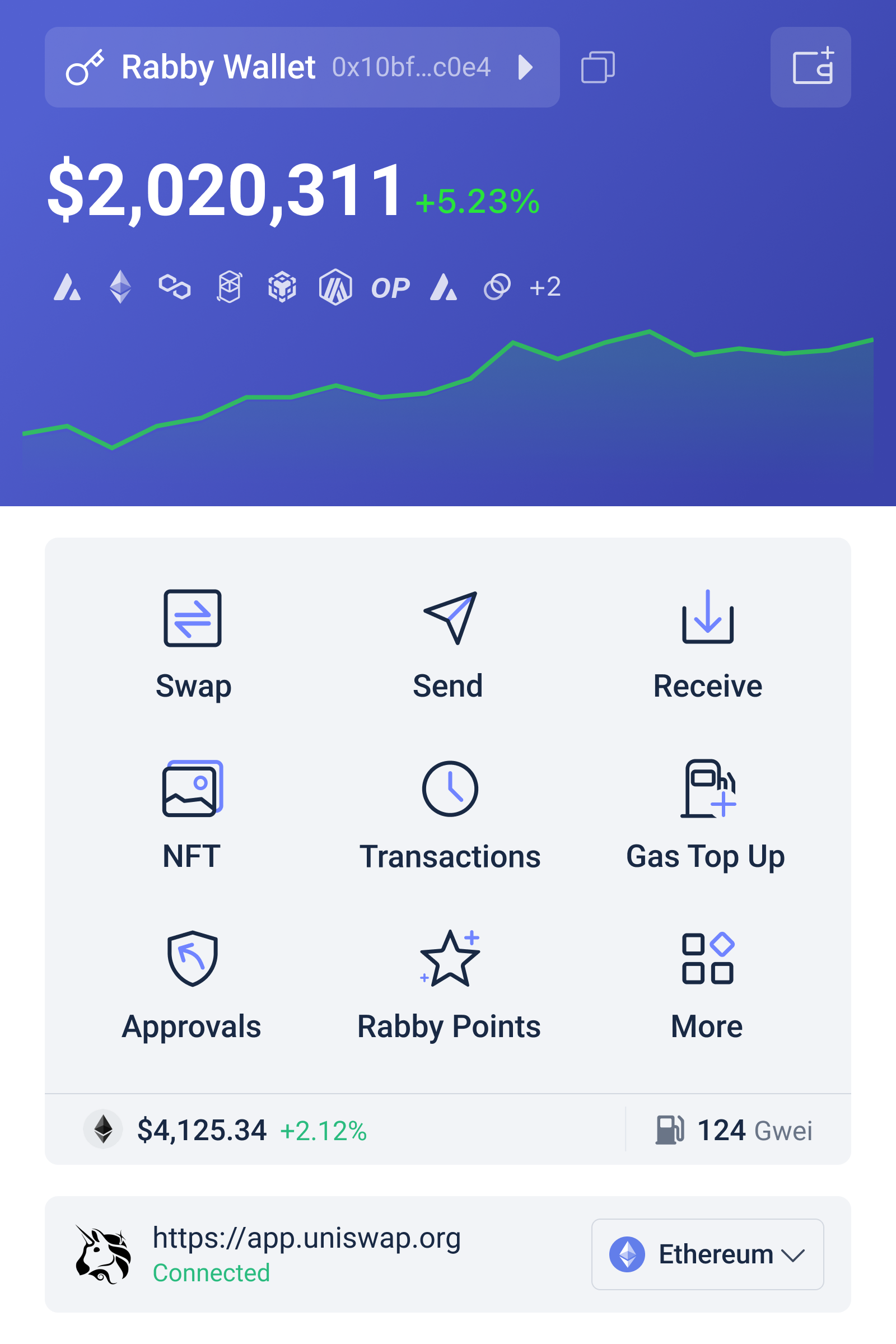
Practical tip: look for wallets that surface simulation results in a clear way, and that support multiple submission paths. It’s one reason practitioners recommend tools that combine simulation, gas-tuning, and private relays under a single UX—because context switching is where mistakes happen. For a straightforward option that offers strong transaction tooling and a developer-friendly experience, check out rabby wallet. It bundles simulation and privacy-focused features in a way that users can actually act on.
Design patterns that protocols and wallets should coordinate on
Coordination beats solo fixes. Here are a few patterns I think deserve wider adoption:
- Batch auctions for swaps — reduce ordering incentives by executing many trades at a single clearing price.
- Delay-and-batch for sensitive operations — brief windows where transactions are hidden and executed together.
- Signed intent plus execution relays — users sign the intent and relays submit to builders without exposing raw txns in the mempool.
- Better UX for slippage — explain worst-case outcomes, not just median estimates.
On one hand these patterns may introduce latency or complexity. On the other hand they meaningfully reduce extractable rent. So protocols need to think in terms of overall user welfare, not just throughput numbers.
Operational realities and trade-offs
I’ll be honest—some MEV is inevitable. The system rewards clever ordering. Trying to stamp it out entirely is unrealistic and may push costs elsewhere. But you can reduce the user-facing harms. That’s the pragmatic approach: mitigation rather than impossible elimination.
Also, not every user needs the highest level of protection. Power traders will accept slippage and speed trade-offs. Retail users prefer simplicity. Good wallet design offers sensible defaults and easy upgrades for more protection. That flexibility is underappreciated.
Finally, there’s the ecosystem question. Builders, relays, and validators are economic actors. Policies, market structures, and even regulation will shape incentives. Wallets that can adapt—expose choices, educate users, and route intelligently—will help shape healthier outcomes.
Common questions about MEV and wallets
Is MEV always bad?
Not always. Some MEV strategies, like honest arbitrage, can improve price discovery. The problem is when extraction is zero-sum and harms ordinary users—think sandwich attacks or censorship. The goal is to minimize harmful extraction while preserving beneficial market functions.
Can a wallet fully prevent MEV?
No, but a wallet can substantially reduce exposure. Through simulations, private submission, and intelligent routing, wallets can lower the probability and cost of exploitative ordering. Combining wallet measures with protocol-level batching or auctioning produces the best results.
So where does that leave us? MEV is a system-level problem that requires layered defenses. Wallets are the immediate user touchpoint and can make a real difference. Protocols and validators play their part too. The most practical path forward is pragmatic: ship protections that reduce harm, educate users about trade-offs, and let choices be explicit rather than hidden.
I’m biased toward tools that make those trade-offs visible and actionable. That transparency is the difference between a wallet that just signs transactions and one that actually protects users in the messy, incentive-driven world of DeFi. It’s messy. But manageable. And worth fixing.






-
Política Bahía6 años hace
Meneses: “Somos el gobierno que más obras ha hecho”
-
Destacado3 años hace
“Nos robaron hasta el 25 de mayo”, sostuvo Uset y apuntó contra el Gobierno Nacional
-

 Destacado3 años hace
El Liberalismo se alista con presencia plena en los 22 distritos de la sección
-
 General6 años hace
Por dónde y qué días pasan los camiones recolectores de basura
-

 Destacado3 años hace
El gobernador se reunió con Osvaldo Barcelona, presidente de Metrogas
-

 Destacado3 años hace
Javier Milei confirmó quien será su compañera de fórmula: “Es brillante”
-
Política Bahía6 años hace
Sistema de Estacionamiento Medido y Pago
-
Coronavirus5 años hace
Horarios y recorridos del transporte público de pasajeros en Bahía